

The 8-Step Growth Strategy to Scale Your Amazon Business
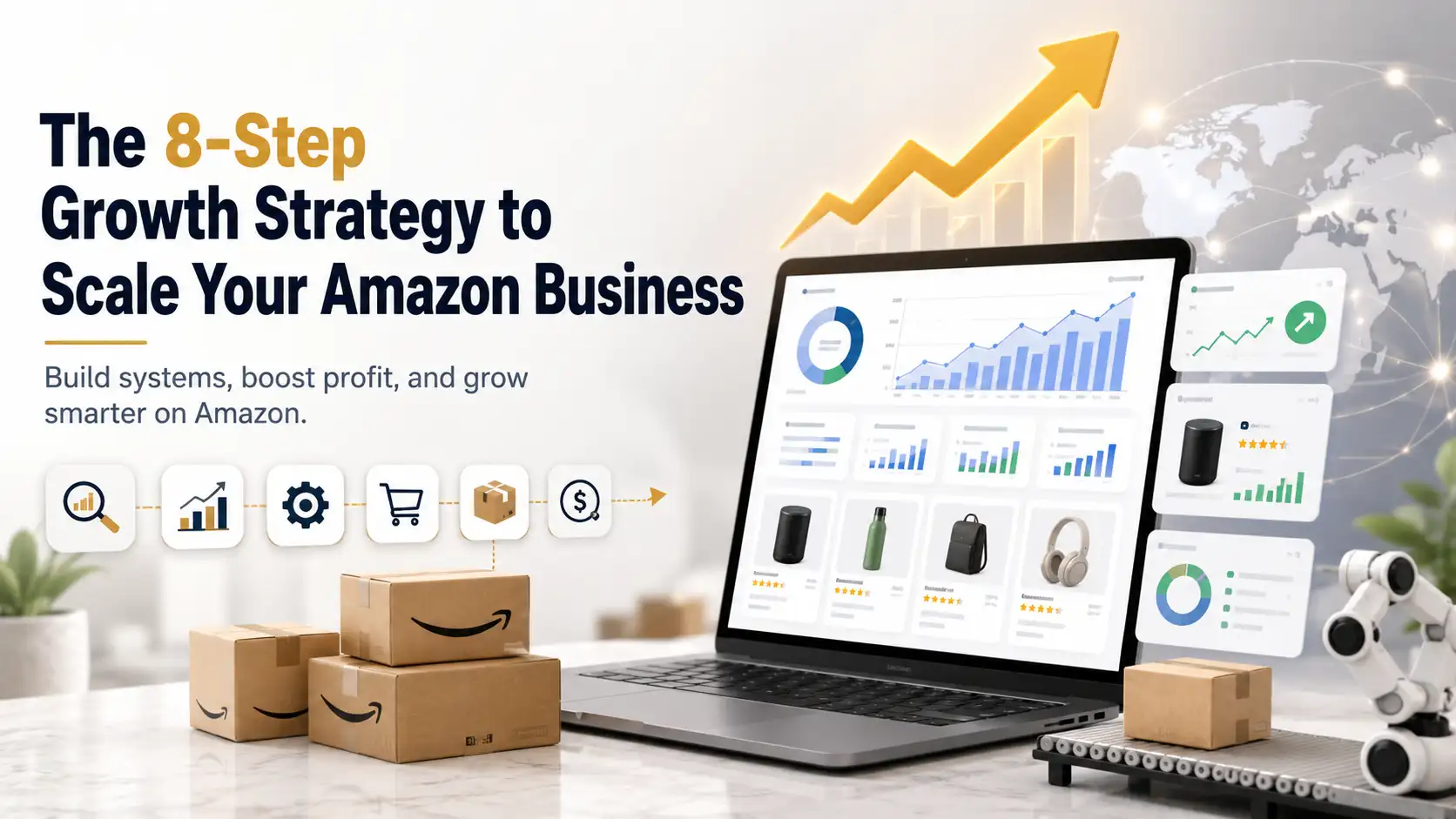
Growing an Amazon business isn't just about selling more products—it's about building a business that can handle more sales without increasing your workload at the same pace.
Many sellers reach a stage where sales begin to grow, but profits don't. Advertising costs increase, inventory becomes harder to manage, and daily tasks consume most of their time. The solution isn't working longer hours; it's creating systems that support sustainable growth.
When listings, advertising, inventory, and daily operations become difficult to manage together, professional Amazon Account Management Services can bring them under one coordinated growth strategy.
If you're ready to move from being an Amazon seller to building a scalable Amazon brand, these eight strategies can help.
Step 1: Strengthen Your Product Listings
Every sale starts with a well-optimized product listing. Even a great product can struggle if customers don't understand its value.
Focus on improving:
- Keyword-optimized product titles
- High-quality product images
- Informative bullet points
- Clear product descriptions
- A+ Content for eligible brands
- Videos that demonstrate product usage
Regularly review your listings and update them based on customer feedback, search trends, and competitor analysis.
Pro Tip: Small improvements in your conversion rate can significantly increase your overall sales without spending more on advertising.
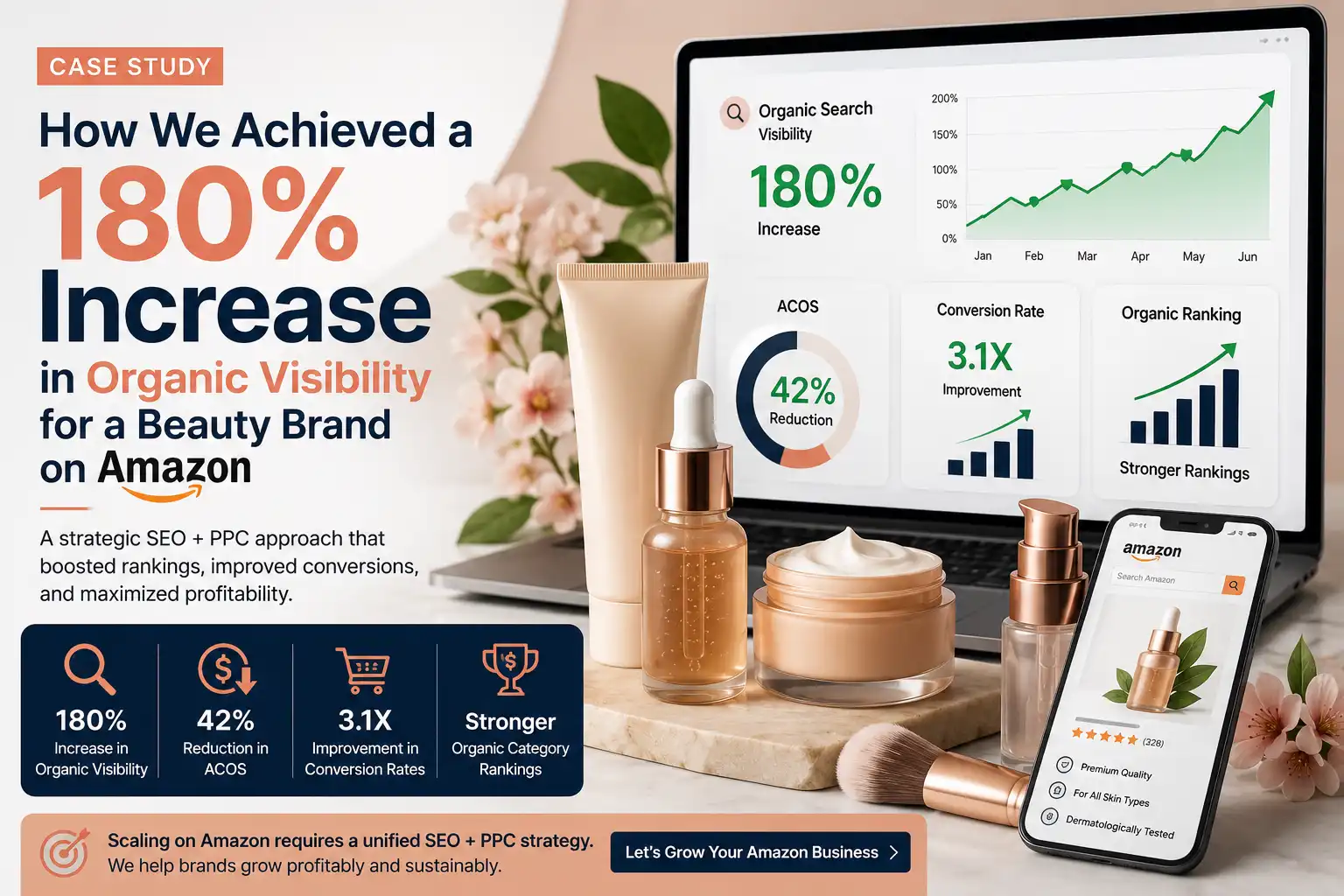
For a practical example, see how listing optimization, improved product visuals, A+ Content, and PPC restructuring helped a beauty brand achieve a 180% increase in organic visibility.
Step 2: Build a Smart Amazon Advertising Strategy
Advertising should generate profitable sales—not just more clicks.
Instead of relying on a single campaign, create a balanced advertising strategy using:
- Sponsored Products
- Sponsored Brands
- Sponsored Display Ads
- Automatic campaigns for keyword discovery
- Manual campaigns for high-performing keywords
Review your advertising data regularly and pause keywords that consistently waste budget.
Monitor important metrics like:
- ACoS
- ROAS
- Click-Through Rate (CTR)
- Conversion Rate
The goal is not simply higher sales—it's higher profits.
See how a complete campaign audit, negative keyword strategy, and SKU-level bid optimization helped an electronics brand reduce Amazon PPC ad waste by 37%.
Step 3: Expand Your Product Catalog
One successful product is a good start, but multiple related products create a stronger business.
Consider adding:
- Complementary products
- Product variations
- Bundles
- Accessories
- Premium versions
For example, if you sell yoga mats, you could also offer resistance bands, foam rollers, yoga blocks, or carrying bags.
A broader catalog increases your Average Order Value (AOV) and reduces your dependence on a single product.
Step 4: Automate Repetitive Tasks
As your business grows, manual work becomes one of the biggest obstacles.
Automating routine tasks allows you to focus on business growth instead of daily operations.
Tasks worth automating include:
- Inventory monitoring
- Review requests
- PPC bid adjustments
- Order reports
- Profit tracking
- Customer communication
Even saving a few hours every week can make a huge difference over time.
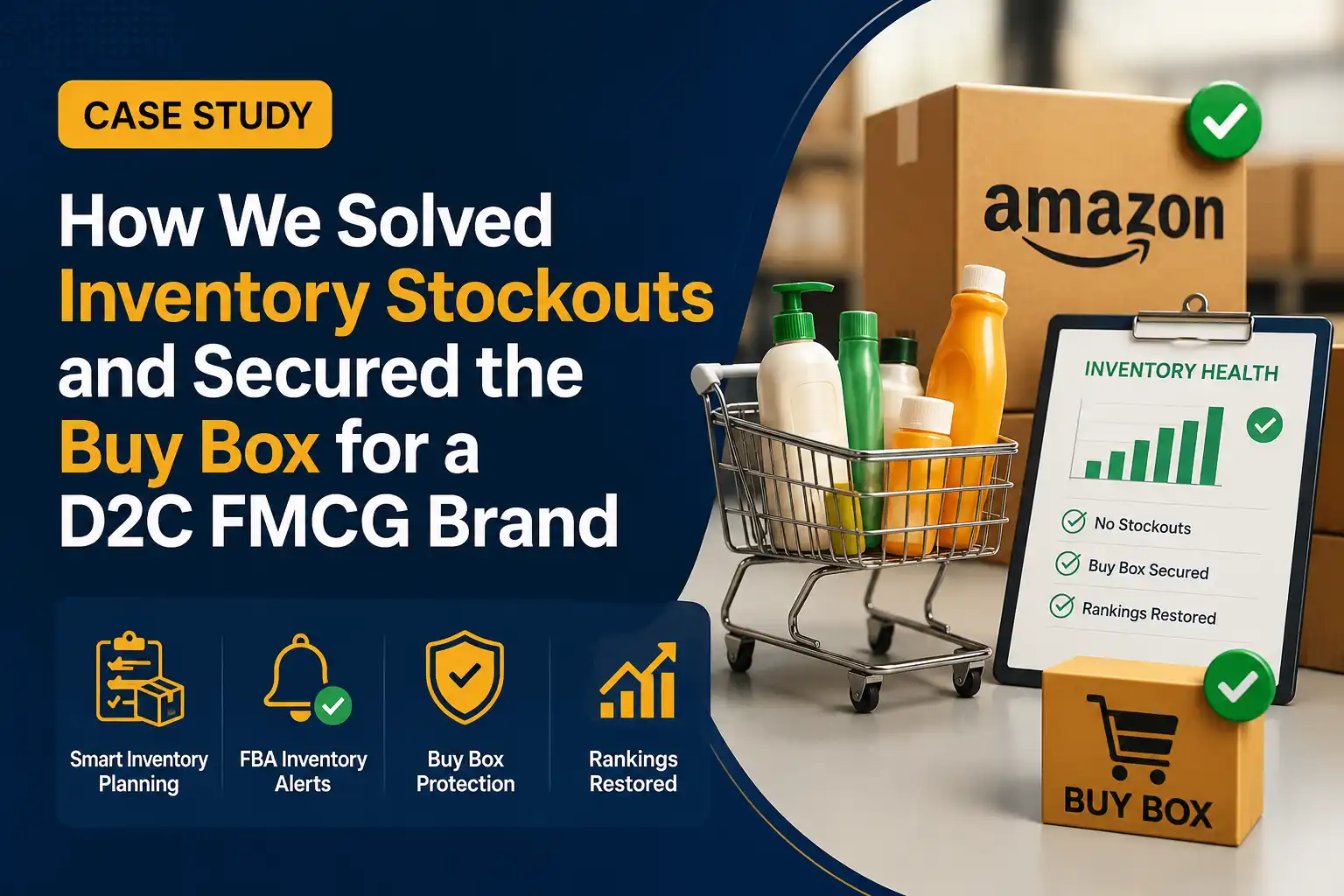
These systems become especially important when inventory instability starts affecting organic rankings and Buy Box ownership. See how an FMCG brand eliminated recurring stockouts and secured the Amazon Buy Box through better forecasting and inventory automation.
Step 5: Track Profit, Not Just Sales
Many Amazon sellers celebrate increasing revenue while their profits continue to shrink.
Successful businesses monitor financial performance carefully.
Keep track of:
- Cost of Goods Sold (COGS)
- Amazon fees
- Advertising costs
- Net profit per SKU
- Inventory costs
- Return rate
- Gross Margin
Before scaling any product, make sure it is consistently profitable.
Higher revenue doesn't always mean a healthier business.
Step 6: Build Customer Trust Through Reviews
Customer reviews directly influence conversions, rankings, and long-term sales.
Instead of chasing quick results, focus on consistently delivering a great customer experience.
Best practices include:
- Fast shipping
- Accurate product descriptions
- High product quality
- Professional packaging
- Timely customer support
- Automated review requests using Amazon-approved methods
The more trust your products earn, the easier it becomes to grow organically.
Step 7: Expand Beyond One Marketplace
Once your business becomes stable in one Amazon marketplace, consider expanding internationally.
Popular marketplaces include:
- Amazon USA
- Amazon UK
- Amazon UAE
- Amazon Canada
- Amazon Australia
- Amazon Europe
Before expanding, research:
- Market demand
- Competition
- Import regulations
- Shipping costs
- Currency differences
International expansion allows you to reach millions of new customers without creating an entirely new business.
Alongside international Amazon expansion, established brands can also diversify their sales through other Indian marketplaces and fast-delivery platforms.
Businesses looking to expand beyond Amazon can explore professional Flipkart Seller Services for account setup, catalog management, advertising, and marketplace growth.
Step 8: Build a Brand, Not Just an Amazon Store
Long-term success comes from creating a recognizable brand instead of relying solely on Amazon traffic.
Consider investing in:
- Trademark registration and Amazon Brand Registry
- A professional logo and packaging
- Social media marketing
- Email marketing
- Your own website (such as Shopify)
- Content marketing
- Repeat customer strategies
A strong brand makes your business more valuable and reduces dependence on a single sales channel.
Common Mistakes That Slow Amazon Business Growth
Many sellers struggle to scale because they make avoidable mistakes, such as:
- Depending on only one product
- Ignoring profit margins
- Running ads without optimization
- Poor inventory planning
- Not analyzing business data
- Delaying automation
- Competing only on price
- Ignoring customer reviews
Avoiding these mistakes can accelerate your growth significantly.
Final Thoughts
Scaling an Amazon business isn't about working harder—it's about making smarter decisions.
By optimizing your listings, improving advertising, expanding your catalog, automating repetitive work, tracking profitability, building customer trust, entering new marketplaces, and creating a real brand, you create a business that can grow consistently year after year.
Rather than chasing short-term sales, focus on building systems that increase efficiency, improve customer satisfaction, and protect your profits. That's what separates successful Amazon brands from ordinary sellers.
FAQs
1. What is the fastest way to scale an Amazon business?
The fastest approach is to optimize your listings, invest in profitable advertising, automate repetitive tasks, and launch complementary products while closely monitoring profit margins.
2. Should I launch more products before scaling?
Not necessarily. First, ensure your existing products are consistently profitable. Once you have stable operations, expand your catalog with related products that complement your niche.
3. How important is Amazon Advertising for business growth?
Amazon Advertising plays a major role in increasing visibility and sales. However, campaigns should always be optimized based on profitability rather than sales volume alone.
4. When should I automate my Amazon business?
Start automating as soon as repetitive tasks begin taking significant time. Automation becomes increasingly valuable as your product catalog and order volume grow.
5. Should I sell only on Amazon?
Amazon is an excellent starting point, but building your own website and expanding to additional marketplaces helps diversify revenue and strengthen your brand over the long term.

July
Senior Marketing Head
July has been working in lynex.in around 10 years now and has been one of the best marketing head overall in the company. her visionary thinking and approach lead us here today, we are now!

More Related Articles
Explore our latest blog and articles for expert insights on web design, SEO, and digital trends.

Comments (0)
No comments yet. Share your thoughts and start the conversation!
Leave a Reply
Your email address will not be published. Required fields are marked *